Don’t Let Your Trash Become a Target for Identity Theft
From: Richard Ginsburg, Alert 360 CEO
At Alert 360, we regularly see incidents of mail theft and identity fraud across the communities we protect. Stolen mail and discarded documents are two of the most common entry points for financial crime—and they’re often preventable.
Securing your mailbox with a locked box or drop slot is important, but protecting your documents inside your home is just as critical.
1 - Protect Your Information
Always shred—don’t toss—documents that contain personal data, including:
• Bank & credit card statements
• Pre-approved credit offers
• Medical bills & insurance documents
• Tax returns & pay stubs
• Shipping labels & prescription information
2 - Use the Right Shredder
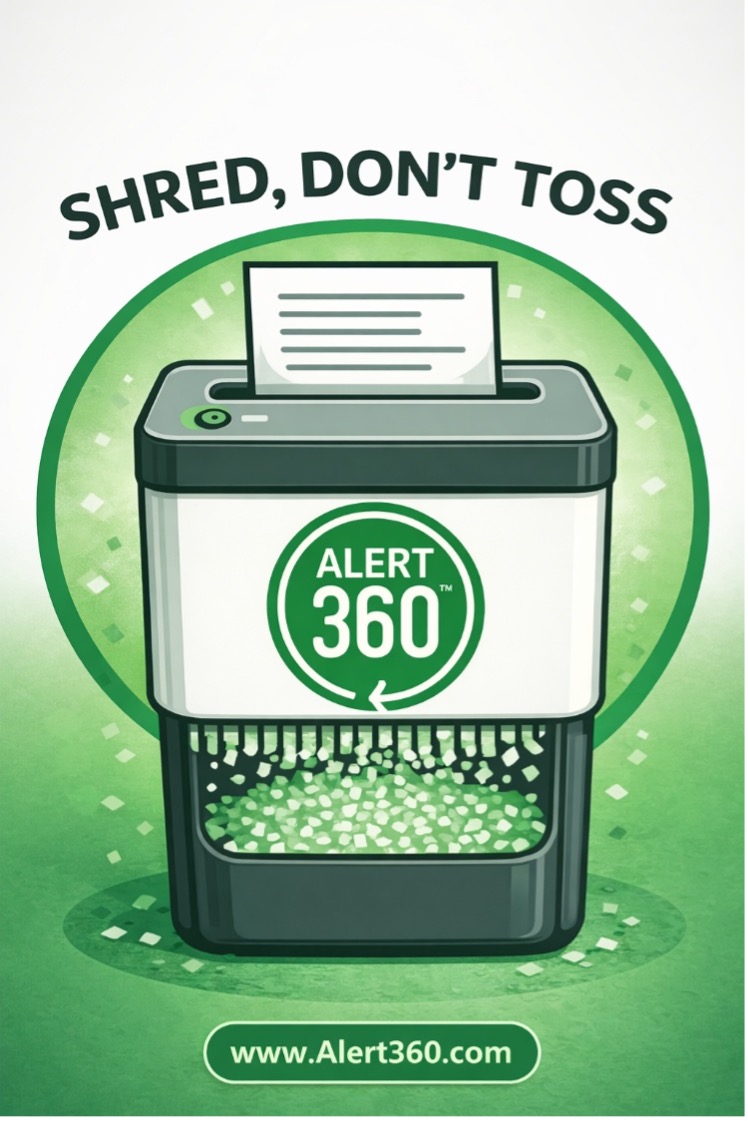
Your best option for disposing of these documents is a shredder—but not just any shredder. A cross-cut or micro-cut shredder is your best bet. A strip-cut shredder, while less expensive, can be easily pieced back together.
There’s a great short video from Frank Abagnale Jr.—whose life inspired the film Catch Me If You Can—where he explains why micro-cut shredders are far more secure and why strip-cut models simply aren’t enough to protect sensitive information.https://youtube.com/shorts/dnzUrGXldZM?si=9YQDcR60V2aR_s1Z
3 - Richard’s Cost Effective Alternative

A reliable old-fashioned marker can do the job. One strong option is the Sharpie Magnum. It features permanent, water-resistant, quick-drying ink and a large 5/8” chisel tip, making it easy to thoroughly black out your name, address, account numbers, barcodes, and any other sensitive information before discarding documents.
When using a marker:
- Completely cover all personal details (don’t just cross through them once)
- Black out barcodes & QR codes
- Mark both sides of the paper if information bleeds through
- Allow ink to fully dry before disposal
- Sharpie Magnum markers are widely available online and at most office supply stores.
A few simple steps can go a long way in protecting your identity.
For more home & community security tips, contact Alert 360.